Sleep Apnea VA Disability Ratings
The VA rates obstructive sleep apnea under 38 CFR 4.97, Diagnostic Code 6847 at 0%, 30%, 50%, or 100%. A 50% rating requires a medical prescription for a continuous positive airway pressure machine or other breathing assistance device. While the VA proposed changing these criteria in 2022 to evaluate treatment response, the existing schedule remains active law until a final rule is published.
On this page
Diagnostic Code 6847 and the current rating schedule
Obstructive sleep apnea, central sleep apnea, and mixed sleep apnea are evaluated by the Department of Veterans Affairs under 38 CFR 4.97, Diagnostic Code 6847. This diagnostic code assigns disability percentages based on symptom severity, daytime impairments, and the medical necessity of breathing assistance hardware. All claims fall within the comprehensive VA disability ratings framework, which assigns evaluations in increments of 10%.
Diagnostic Code 6847 outlines four specific evaluation levels:
- 0% rating: The veteran is asymptomatic but has documented sleep disorder breathing confirmed through objective diagnostic testing.
- 30% rating: The veteran experiences persistent daytime hypersomnolence (excessive daytime sleepiness) that does not improve after sleep, but the condition does not require continuous positive airway pressure therapy or nocturnal breathing equipment.
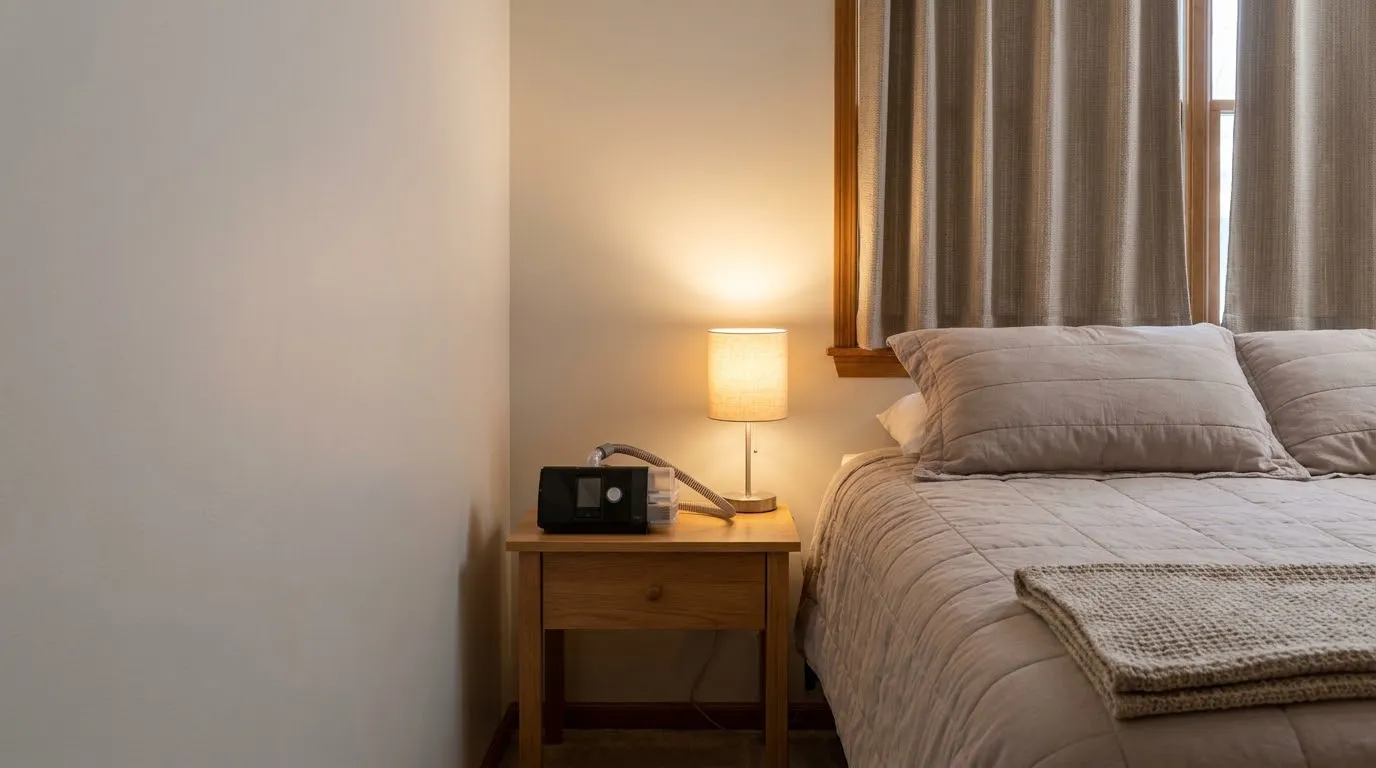
- 50% rating: The condition requires the use of a breathing assistance device, such as a continuous positive airway pressure (CPAP) machine, bi-level positive airway pressure (BiPAP) machine, auto-titrating CPAP (APAP), or an custom prescribed oral mandibular advancement appliance.
- 100% rating: The veteran experiences chronic respiratory failure characterized by carbon dioxide retention, cor pulmonale (right-sided heart enlargement caused by pulmonary hypertension), or requires a tracheostomy to maintain an open airway.
A 50% rating for sleep apnea pays $1,132.90 per month for a veteran without dependents, effective 2025-12-01. Because sleep apnea is one of the highest individual schedular evaluations frequently granted to veterans, understanding how examiners assess the condition is vital for preparing an evidentiary submission.

The CPAP prescription rule and the 50 percent threshold
The vast majority of compensable sleep apnea claims are adjudicated at the 50% evaluation level. Under the language of Diagnostic Code 6847, a 50% rating is warranted when the condition requires the use of breathing assistance devices.
To satisfy the regulatory requirements for a 50% rating under current precedent and manual provisions in M21-1, three elements must be established:
- A formal medical prescription: A licensed medical doctor, pulmonary specialist, or sleep specialist must formally prescribe a qualifying breathing assistance device.
- Medical necessity: The medical record must document that the device is medically necessary to treat diagnosed sleep-disordered breathing, substantiated by an elevated Apnea-Hypopnea Index (AHI) or Respiratory Disturbance Index (RDI).
- Qualifying device: While standard continuous positive airway pressure machines are the most common, the VA recognizes other breathing devices. These include bilevel positive airway pressure units, non-invasive positive pressure ventilators, and custom dental orthotics designed to advance the mandible and keep the upper airway patent.
VA rating adjudicators do not track machine compliance data or require smart-card download logs showing nightly hours of use to maintain a 50% evaluation. The legal standard established in federal court decisions requires that the veteran requires the use of the device based on a competent medical determination, not that the veteran achieves perfect nightly adherence.
Status of the proposed rating schedule changes
On February 15, 2022, the Department of Veterans Affairs published a proposed rule in the Federal Register (87 FR 8474, Docket VA-2022-VBA-0009, RIN 2900-AQ72) titled Schedule for Rating Disabilities—Ear, Nose, Throat, and Audiology Disabilities; Special Provisions Regarding Evaluation of Respiratory Conditions; Schedule for Rating Disabilities—Respiratory System. This proposal generated extensive debate because it sought to eliminate the automatic 50% rating for veterans prescribed a CPAP machine.
Under the proposed rule, the VA suggested restructuring Diagnostic Code 6847 into four different tiers:
- 0% rating: Asymptomatic with or without treatment.
- 10% rating: Incomplete relief (as determined by sleep study) with treatment.
- 50% rating: Treatment ineffective (as determined by sleep study) or unable to use treatment due to comorbid conditions; and without end-organ damage.
- 100% rating: Treatment ineffective (as determined by sleep study) or unable to use treatment due to comorbid conditions; and with end-organ damage.
Veterans frequently ask whether this proposed rule is currently active. The proposed rule has not been finalized. The VA has not published a Final Rule with an effective date in the Federal Register. All claims filed today, including initial claims, supplemental claims, and Higher-Level Reviews, continue to be adjudicated strictly under the existing 1996 rating schedule where a CPAP prescription qualifies for a 50% rating.
Furthermore, veterans who receive a grant of 50% under the existing criteria are protected by federal grandfathering rules codified at 38 CFR 3.951(a). Under this regulation, a change in the VA rating schedule cannot serve as the legal ground for reducing an established service-connected rating. A veteran’s rating can only be reduced if the VA performs a re-evaluation demonstrating that the underlying disability has shown material, sustained physical improvement under ordinary conditions of life.
Establishing service connection for sleep apnea
Receiving a grant of benefits for sleep apnea requires proving legal service connection under one of three primary theories: direct, secondary, or presumptive service connection.
Direct service connection
Direct service connection under 38 CFR 3.303 requires showing that sleep apnea began during active military service. This is relatively straightforward if you underwent an overnight sleep study while on active duty and received a CPAP machine from military medical personnel. However, many veterans did not undergo sleep testing while serving.
In the absence of an in-service polysomnogram, direct service connection can sometimes be established through:
- Service treatment records noting chronic snoring, observed breathing pauses, or daytime fatigue.
- Buddy statements and lay evidence from fellow service members, roommates, or spouses who observed severe choking, gasping, or cessation of breathing during active duty.
- A competent medical nexus linking current sleep apnea to documented in-service respiratory trauma or blast exposure.
Secondary service connection
Because sleep apnea often develops or becomes clinically apparent years after discharge, the majority of successful claims are filed as secondary service connection under 38 CFR 3.310(a). Under this regulation, a disability that is proximately due to, or the result of, an already service-connected condition is rated at the same percentage as if directly incurred.
Common primary conditions that support secondary service connection for sleep apnea include:
- Post-Traumatic Stress Disorder (PTSD) and Mental Disorders: Psychiatric medications that induce weight gain, hyperarousal states that fragment sleep architecture, and autonomic nervous system dysfunction can aggravate upper airway collapse.
- Chronic Sinusitis and Allergic Rhinitis: Severe chronic inflammation of the upper nasal passages and turbinate hypertrophy increase airway resistance and induce negative pressure collapse of the pharynx.
- Deviated Septum and Nasal Trauma: Structural nasal obstruction incurred from in-service facial trauma forces mouth breathing, which destabilizes the retroglossal airway during sleep.
- Musculoskeletal Injuries (Spine and Lower Extremities): Orthopedic injuries that prevent physical exercise can lead to unavoidable weight gain, which serves as a physiological bridge to obstructive sleep apnea.
Presumptive service connection under the PACT Act
The Sergeant First Class Heath Robinson Honoring our Promise to Address Comprehensive Toxics (PACT) Act of 2022 established presumptive service connection for numerous respiratory conditions resulting from particulate matter and burn pit exposure. While sleep apnea itself was not included as an explicit statutory presumptive condition under 38 U.S.C. § 1120, veterans exposed to toxic burn pits often develop presumptive chronic rhinitis, chronic sinusitis, or asthma. Once those conditions are granted presumptive service connection, sleep apnea can then be claimed as secondary to the presumptive respiratory disability.
Secondary connection to PTSD and the obesity intermediate step
Connecting obstructive sleep apnea secondary to PTSD is one of the most litigated claim types before the Board of Veterans’ Appeals. A common hurdle arises when a VA Compensation and Pension examiner concludes that a veteran’s sleep apnea was caused entirely by weight gain or obesity rather than military service or mental health.
To resolve this conflict, veterans and their representatives rely on VA General Counsel Precedent Opinion 1-2017 (VAOPGCPREC 1-2017), issued on January 6, 2017. This precedential opinion established two critical legal principles:
- Obesity is not a disability: Obesity cannot be directly service connected as a standalone compensable disability because it is not recognized as a disease or injury under 38 U.S.C. § 1110.
- Obesity can be an intermediate step: Even though obesity cannot be directly rated, it can legally serve as an intermediate step between an already service-connected disability and a secondary condition under 38 CFR 3.310(a).
When applying VAOPGCPREC 1-2017, the medical rationale follows a clear three-part chain of causation:
- Step 1: The veteran’s service-connected primary condition (such as PTSD or chronic spine and knee injuries) caused substantial weight gain. In PTSD claims, this is typically established by showing that depressive symptoms, severe emotional distress, disrupted sleep architecture, or prescribed psychotropic medications (such as SSRIs or atypical antipsychotics) caused substantial metabolic changes and weight gain.
- Step 2: The resulting weight gain and increased neck circumference directly caused or substantially aggravated the anatomical collapse of the upper airway, producing obstructive sleep apnea.
- Step 3: A qualified medical professional provides a written nexus opinion confirming that but for the service-connected disability causing the weight gain, the veteran would not have developed obstructive sleep apnea.
This precedent opinion is legally binding on all VA regional adjudicators and Board of Veterans’ Appeals judges.
Required medical evidence and the sleep apnea DBQ
To substantiate a sleep apnea claim, the VA requires objective clinical proof. Lay testimony alone cannot substitute for diagnostic laboratory measurements.
The diagnostic sleep study
The VA requires an overnight sleep study documenting sleep-disordered breathing. The study measures two key indices:
- Apnea-Hypopnea Index (AHI): The average number of apneas (complete pauses in breathing) and hypopneas (partial airway obstructions causing oxygen desaturation) per hour of sleep. An AHI of 5 to 14 indicates mild sleep apnea; 15 to 29 indicates moderate sleep apnea; and 30 or greater indicates severe sleep apnea.
- Respiratory Disturbance Index (RDI): A broader index that includes respiratory effort-related arousals (RERAs) in addition to apneas and hypopneas.
While an attended in-laboratory polysomnogram is preferred, the VA accepts unattended home sleep apnea tests (HSATs) provided the study records airflow, respiratory effort, and blood oxygen saturation, and is formally signed and interpreted by a licensed physician.
The Disability Benefits Questionnaire (DBQ)
During a Compensation and Pension (C&P) exam, the examining clinician completes the official Sleep Apnea Disability Benefits Questionnaire (DBQ). This document records:
- Section I (Diagnosis): Whether the veteran has or has ever had sleep apnea, the diagnostic type (obstructive, central, mixed, or other sleep disorder), ICD code, and date of diagnosis.
- Section II (Medical History): The history (including onset and course) of the sleep disorder condition, whether continuous medication is required for control, and whether the veteran requires the use of a breathing assistance device such as a continuous positive airway pressure (CPAP) machine (Item 2C, a Yes/No checkbox).
- Section III (Findings, Signs and Symptoms): Checkboxes for findings attributable to sleep apnea: persistent daytime hypersomnolence, carbon dioxide retention, chronic respiratory failure, cor pulmonale, requires tracheostomy, or other findings.
- Sections IV–VI (Other Findings, Diagnostic Testing, and Functional Impact): Other pertinent physical findings or scars (Section IV); whether a sleep study has been performed, whether the veteran has documented sleep disorder breathing, and the date, facility, and results of the sleep study (Section V); and whether sleep apnea impacts the veteran’s ability to work (Section VI).
The independent medical nexus opinion
For secondary claims, submitting an independent medical nexus opinion prepared by a board-certified sleep specialist, pulmonologist, or occupational medicine physician before your C&P exam significantly strengthens the record. The nexus opinion must include a thorough review of your military and post-service medical records, cite relevant medical literature linking the conditions, apply the correct intermediate step legal framework, and express an opinion based on the legal standard of at least as likely as not.
Secondary conditions caused by sleep apnea
Chronic obstructive sleep apnea deprives vital organs of oxygen throughout the night, triggering repeated surges of adrenaline and systemic arterial inflammation. As a result, veterans with service-connected sleep apnea frequently develop secondary physical conditions that qualify for separate disability ratings under 38 CFR 3.310(a):
- Hypertension (Diagnostic Code 7101): Nocturnal hypoxemia and sustained sympathetic nervous system activation frequently produce chronic essential hypertension that requires daily blood pressure medications.
- Coronary Artery Disease and Heart Failure (Diagnostic Code 7005): Repeated fluctuations in intrathoracic pressure and oxygen deprivation increase the risk of myocardial infarction, ischemic heart disease, and cardiomyopathy.
- Depression and Anxiety (38 CFR 4.130): Severe, unrefreshing sleep and chronic fatigue alter neurotransmitter regulation, frequently leading to secondary depressive disorders.
- Gastroesophageal Reflux Disease (GERD) (Diagnostic Code 7206): Increased negative intrathoracic pressure during obstructive airway events pulls acidic stomach contents upward into the esophagus.
Each secondary condition is evaluated under its own schedular diagnostic code and factored into the veteran’s combined disability rating.
Combined ratings and calculating retroactive back pay
Because sleep apnea carries a substantial 50% rating when a CPAP is prescribed, granting this claim often makes a dramatic difference in a veteran’s overall combined rating. However, because ratings are combined using the non-additive whole-person formula under 38 CFR 4.25, adding a 50% evaluation to existing ratings does not result in a direct 50% increase. You can model how an approved sleep apnea rating will alter your overall monthly compensation using our VA combined rating calculator.
The effective date for your sleep apnea grant will determine the amount of retroactive pay owed to you by the government. Under 38 CFR 3.400, your effective date is established by the date the VA received your formal claim or Intent to File, provided your medical evidence shows the disability existed at that time. If your claim was delayed or required appeals through a Supplemental Claim or Higher-Level Review, you may be entitled to substantial retroactive payments dating back to your original submission. You can estimate your accrued compensation using our VA back pay calculator.
Working with accredited representatives for your claim
Developing the technical medical evidence required to service connect sleep apnea—particularly under complex secondary theories involving obesity as an intermediate step—can be challenging. Under federal statute, you should only seek claim preparation assistance from individuals who hold official credentials recognized by the Department of Veterans Affairs.
Accredited representatives include:
- Veterans Service Organizations (VSOs): Service officers from organizations like the VFW, Disabled American Veterans (DAV), and the American Legion provide claims assistance at no charge to the veteran.
- Accredited Claims Agents: Private claims professionals certified by the VA Office of General Counsel who have demonstrated mastery of federal veterans benefits law through formal examination.
- Accredited Attorneys: Licensed lawyers in good standing who are authorized to represent claimants before VA Regional Offices, the Board of Veterans’ Appeals, and the Court of Appeals for Veterans Claims (CAVC).
Never pay unaccredited consultants or companies that demand a percentage of your retroactive back pay or ask you to sign unauthorized fee agreements. You can verify the accreditation status of any representative or locate free certified assistance near you using the official VA Office of General Counsel Accreditation Directory.
This guide explains the rules; it is not legal or medical advice. VA decisions depend on your records. Free help is available from accredited Veterans Service Organizations.
Frequently asked questions
What is required to receive a 50% VA rating for sleep apnea?
Under 38 CFR 4.97, Diagnostic Code 6847, a 50% evaluation requires two core components: a confirmed medical diagnosis of obstructive sleep apnea established through a qualifying overnight sleep study, and a formal medical prescription for a continuous positive airway pressure machine or other qualifying breathing assistance device from a competent medical provider.
Has the VA changed the sleep apnea rating schedule for CPAP machines?
No. Although the Department of Veterans Affairs issued a proposed rule on February 15, 2022 (87 FR 8474, Docket VA-2022-VBA-0009) to revise sleep apnea evaluations based on treatment efficacy, the agency has not published a final rule. Until a final rule is enacted and takes effect, all claims are decided under the current 0%, 30%, 50%, and 100% criteria.
Will existing 50% sleep apnea ratings be reduced if the rating rule changes?
Veterans with an established service-connected rating are legally protected by 38 CFR 3.951(a). When the VA alters diagnostic criteria in the rating schedule, it cannot reduce an existing rating solely due to the schedule revision. Reductions require medical evidence demonstrating sustained material improvement in the condition under ordinary life conditions.
Can sleep apnea be service connected secondary to PTSD?
Yes. Sleep apnea can be established as secondary to service-connected Post-Traumatic Stress Disorder under 38 CFR 3.310(a). This requires a detailed medical nexus opinion from a qualified physician explaining how PTSD symptoms, psychiatric medications, or sleep architecture disruption directly caused or materially aggravated the veteran's obstructive sleep apnea.
How can obesity help link sleep apnea to a service-connected disability?
Under VA General Counsel Precedent Opinion 1-2017, obesity cannot be directly service connected as a disability, but it can serve as an intermediate step in a secondary service connection chain. A veteran must show that a service-connected condition caused reduced physical mobility or weight gain, which was then a substantial factor in causing or aggravating obstructive sleep apnea.
Is an in-lab polysomnogram sleep study mandatory for a VA claim?
The VA requires an objective sleep study demonstrating an abnormal Apnea-Hypopnea Index or Respiratory Disturbance Index. While in-lab polysomnography remains the gold standard, the VA accepts qualifying unattended home sleep apnea tests if they record essential physiological parameters and are interpreted by a licensed physician.