Hearing loss VA disability rating schedule and test tables
The Department of Veterans Affairs rates hearing loss under 38 CFR 4.85 and Diagnostic Code 6100 using a mathematical formula rather than subjective difficulty. Rating specialists compare your puretone audiometry thresholds across 1000, 2000, 3000, and 4000 Hertz and Maryland CNC speech discrimination scores across Table VI and Table VII. Because Table VII requires severe bilateral impairment for compensable percentages, most service-connected veterans receive a 0% or 10% rating.
On this page
Understanding the VA rating schedule for hearing loss (DC 6100)
Hearing loss is one of the most widespread service-connected conditions in the VA ratings inventory, yet it remains one of the most frustrating for veterans to understand. Many veterans who struggle daily to understand spoken conversations or who rely on prescription hearing aids receive decision letters assigning a 0% rating or a modest 10% evaluation.
The Department of Veterans Affairs does not evaluate hearing loss based on subjective symptoms or personal testimony. Instead, adjudicators follow a rigid mathematical formula established under 38 CFR 4.85 (Table VI and Table VII), the schedule used for Diagnostic Code 6100. The ear-disease codes (6200 series) are listed separately in 38 CFR 4.87.
To rate hearing impairment, the VA combines the results of puretone audiometry testing and a controlled speech discrimination test. These clinical figures are translated into Roman numerals using Table VI, and the Roman numerals for both ears are cross-referenced on Table VII to yield a final disability percentage.

The audiometric testing requirements
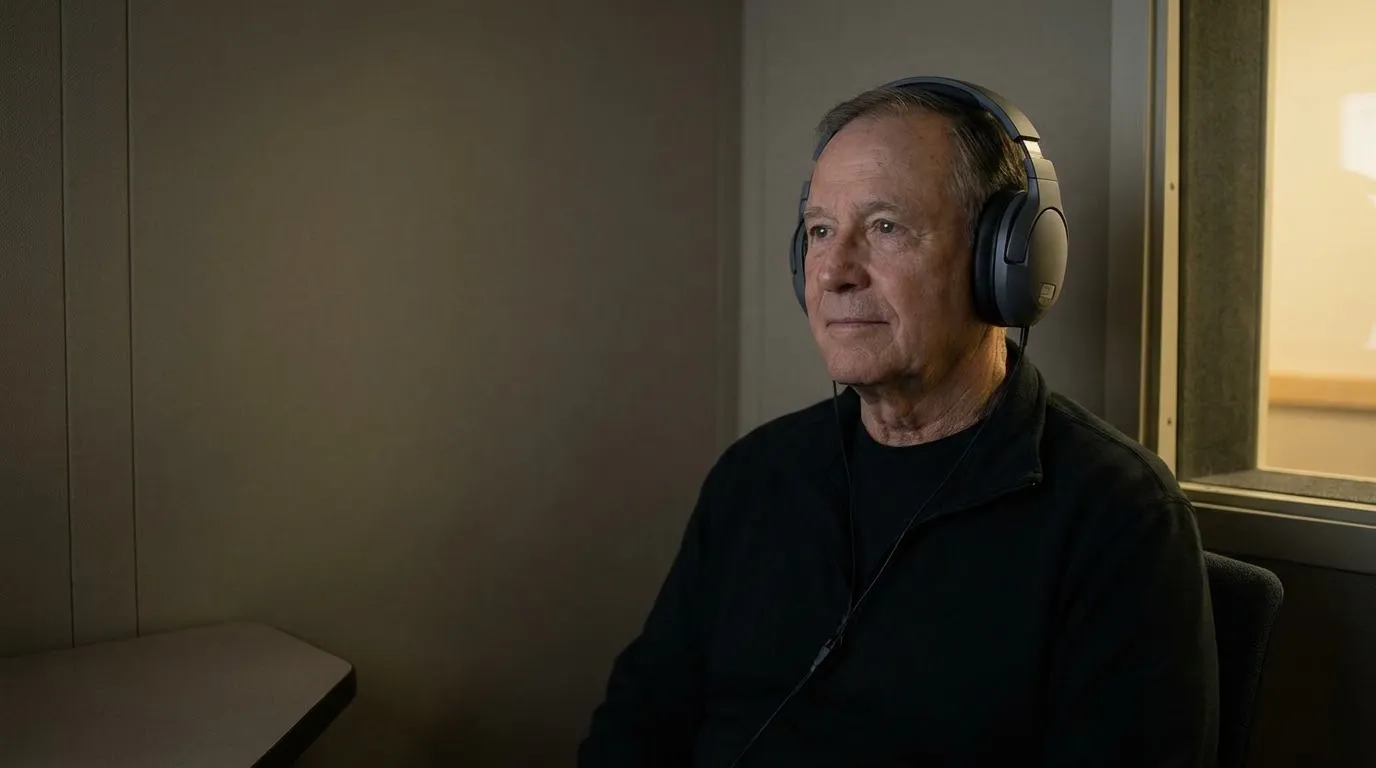
Under 38 CFR 4.85, a valid VA disability evaluation for hearing loss requires specific auditory examinations performed by a state-licensed audiologist. The veteran must be tested without hearing aids.
The examination involves two mandatory components:
1. Puretone audiometry and puretone threshold averages
The audiologist tests hearing thresholds across frequencies measured in Hertz (Hz). For VA rating purposes, four specific frequencies are measured in decibels (dB):
- 1000 Hz
- 2000 Hz
- 3000 Hz
- 4000 Hz
The hearing thresholds at these four specific frequencies are added together and divided by four to determine the Puretone Threshold Average (PTA) for each ear. For example, if a veteran has thresholds of 35 dB at 1000 Hz, 45 dB at 2000 Hz, 55 dB at 3000 Hz, and 65 dB at 4000 Hz, the sum is 200 dB. Dividing by four yields a PTA of 50 dB.
Under 38 CFR 4.86, two exceptional patterns of hearing impairment apply: (a) when the puretone threshold at each of the four specified frequencies (1000, 2000, 3000, and 4000 Hz) is 55 decibels or more, the rating specialist evaluates the ear under both Table VI and Table VIa and assigns whichever numeric designation is higher; and (b) when the puretone threshold is 30 decibels or less at 1000 Hz and 70 decibels or more at 2000 Hz, the numeric designation is determined from whichever table (Table VI or Table VIa) results in the higher numeral, and that numeral is then elevated to the next higher Roman numeral.
2. Maryland CNC speech discrimination test
Puretone audiometry measures the volume at which you hear sounds, but it does not measure how well you comprehend spoken language. For speech comprehension, the VA mandates the Maryland CNC (Consonant-Nucleus-Consonant) test.
The audiologist delivers a recorded list of 50 monosyllabic words at calibrated volume levels. The veteran repeats each word heard. The result is expressed as a percentage score from 0% to 100%. Maintaining high speech discrimination scores significantly influences the Roman numeral assigned to each ear.
Assigning Roman numerals with Table VI and Table VIa
Once testing is complete, the VA uses Table VI (“Numeric Designation of Hearing Impairment Based on Puretone Threshold Average and Speech Discrimination”) to assign a Roman numeral from I through XI to each ear.
Table VI features a grid:
- The horizontal rows reflect your Maryland CNC speech discrimination percentage in eight-point brackets (from 92% through 100% at the top down to 0% to 34% at the bottom).
- The vertical columns reflect your Puretone Threshold Average in decibels (ranging from 0-41 dB up to 98+ dB in Table VI, and up to 105+ dB in Table VIa).
Where your speech discrimination score and puretone average intersect, Table VI assigns a Roman numeral:
- Roman Numeral I represents normal or near-normal hearing.
- Roman Numeral XI represents profound hearing impairment.
If an audiologist certifies that speech discrimination testing is medically inappropriate—such as when severe language barriers exist or speech scores are clinically invalid—the VA uses Table VIa, which assigns Roman numerals based solely on the puretone threshold average.
Determining your final percentage with Table VII
With Roman numerals determined for both ears, the rating specialist turns to Table VII (“Percentage Evaluations for Hearing Impairment”).
Table VII is a cross-reference matrix:
- The horizontal rows represent the Roman numeral of the better ear (I through XI).
- The vertical columns represent the Roman numeral of the poorer ear (I through XI).
The intersection of these two values gives your final disability percentage:
- If both ears are Roman Numeral I: 0% rating.
- If the better ear is I and the poorer ear is II through IX: 0% rating.
- If the better ear is I and the poorer ear is X or XI: 10% rating.
- If the better ear is II and the poorer ear is V through XI (or if both ears are IV): 10% rating.
- If the better ear is III and the poorer ear is VII through XI (or if both ears are V): 20% rating.
At the 10% tier, a veteran without dependents receives $180.42 per month under the rate schedule effective 2025-12-01.
Why the bilateral factor does not apply
Normally, when a veteran has service-connected disabilities affecting paired extremities or paired skeletal muscles, the VA applies a 10% bilateral factor under 38 CFR 4.26 to increase the combined rating.
However, hearing loss is an explicit exception. The rating schedule in Table VII already incorporates the interaction of both ears into a single combined percentage. Therefore, no bilateral factor is added to hearing loss evaluations under DC 6100.
Why most hearing loss ratings are 0 percent or 10 percent
Veterans frequently express dismay that severe hearing difficulties result in a 0% noncompensable rating or a baseline 10% rating. Understanding the design of Table VII clarifies why this happens.
Human speech comprehension depends heavily on lower frequencies (500 Hz to 2000 Hz). Many military veterans suffer from sensorineural hearing loss caused by acoustic trauma from gunfire, jet engines, or artillery. This trauma typically damages high frequencies (3000 Hz to 8000 Hz) while leaving speech frequencies relatively intact.
Because a veteran can still score 80% to 90% on the Maryland CNC test when lower frequencies are preserved, Table VI assigns a low Roman numeral like I or II to each ear. On Table VII, an intersection of Roman Numeral I and II produces a 0% rating.
Even with a 0% rating, establishing service connection is critically important:
- It confirms that the military caused your hearing loss.
- It entitles you to free VA audiology care, including modern digital hearing aids, replacement batteries, and assistive listening devices.
- It establishes an official baseline. If your hearing deteriorates as you age, you can file for an increased evaluation based on new audiometric testing without having to prove service connection again.
Establishing service connection for hearing loss
To successfully claim hearing loss, you must show military noise exposure, a current diagnosis meeting VA thresholds, and a medical nexus connecting them.
Military occupational specialties and conceded noise exposure
Under Section V.iii.2.B.1.b of the M21-1 Adjudication Procedures Manual, VA adjudicators reference the Duty Military Occupational Specialty (MOS) Noise Exposure Listing—an internal VA spreadsheet (dutymosnoise.xls) reviewed and endorsed by each branch of service—to evaluate each documented duty MOS, Air Force Specialty Code, rating, or duty assignment:
- High, moderate, or low probability of exposure: When the Duty MOS Noise Exposure Listing shows a duty position has a high, moderate, or low probability of hazardous noise exposure, the VA concedes exposure to hazardous noise for the purpose of establishing an event in service. Under Section V.iii.2.B.1.d, the VA provides the conceded probability level (high, moderate, or low) to the audiometric examiner in the examination request.
- Combat service (38 CFR 3.304(d)): When records establish that a veteran engaged in combat with the enemy in active service during a period of war, campaign, or expedition, the VA likewise concedes exposure to hazardous noise for the purpose of establishing an in-service event and includes that detail in the examination request.
- All available evidence: Section V.iii.2.B.1.b specifies that the Duty MOS Noise Exposure Listing is not an exclusive means of establishing in-service noise exposure; adjudicators evaluate hearing loss claims in light of the circumstances of service and all available evidence, including treatment records and examination results.
Pre-service vs post-service audiograms
During C&P evaluations, the examiner compares your entrance examination audiogram with your separation audiogram. If your military exit exam demonstrated a significant threshold shift compared to your enlistment physical, that documentation provides direct evidence of in-service auditory damage.
Recent regulatory updates and proposed rule RIN 2900-AQ72
In February 2022, the VA published a proposed rule in the Federal Register (87 FR 8474, RIN 2900-AQ72) concerning the rating schedule for ear, nose, throat, and audiology conditions.
Under this proposed rule, the VA suggested eliminating the standalone 10% disability rating for tinnitus under Diagnostic Code 6260, instead treating tinnitus as an associated symptom subsumed under hearing loss or other underlying conditions. The proposal suggested that noncompensable hearing loss with documented tinnitus could qualify for a 10% evaluation under certain criteria.
However, RIN 2900-AQ72 has not been enacted as a final rule. Until the VA publishes a final rule with a formal effective date, the existing rating criteria under 38 CFR 4.85 and 38 CFR 4.87 remain fully in force. Veterans can continue to file claims for standalone tinnitus ratings alongside hearing loss claims.
Combining hearing loss with other claims and tracking back pay
Hearing loss ratings combine with your other service-connected conditions using whole-person VA math. You can verify how your hearing evaluation impacts your overall disability percentage using the VA combined rating calculator.
If you previously filed an intent to file or had a claim delayed through appeals, your effective date dictates the retroactive compensation due. You can calculate accrued payments using the VA back pay calculator.
Finding accredited representation
Navigating audiology data, Table VI and Table VII ratings, and service records can be complex. Veterans are strongly encouraged to work with accredited representatives rather than unvetted private companies that charge illicit fees.
Accredited Veterans Service Officers (VSOs) from organizations like the DAV, VFW, and American Legion provide free claims assistance. Accredited attorneys and claims agents can assist with formal appeals before the Board of Veterans’ Appeals. Always verify credentials through the official VA accreditation search directory.
This guide explains the rules; it is not legal or medical advice. VA decisions depend on your records. Free help is available from accredited Veterans Service Organizations.
Frequently asked questions
Why do most veterans receive a 0% or 10% rating for hearing loss?
The rating schedule under 38 CFR 4.85 is calibrated so that compensable percentages above 10% require profound bilateral hearing impairment. A veteran who struggles to hear conversations in crowded rooms or requires hearing aids often tests within Roman numeral categories that intersect at 0% or 10% on Table VII. Even severe high-frequency loss produces modest ratings because lower speech frequencies maintain word recognition scores.
What audiometric tests are required for a hearing loss C&P exam?
Under 38 CFR 4.85, the VA requires testing administered by a state-licensed audiologist without the use of hearing aids. The evaluation consists of puretone air conduction audiometry at 1000, 2000, 3000, and 4000 Hertz, plus a controlled speech discrimination test using the Maryland CNC fifty-word list. Bone conduction testing and acoustic reflex tests may also be conducted to differentiate sensorineural from conductive loss.
How does the Maryland CNC speech discrimination test work?
The Maryland CNC test presents a recorded fifty-word list of monosyllabic words with consonant-nucleus-consonant structure into your headphones at calibrated volume levels. The audiologist calculates the percentage of words you repeat correctly. For instance, correctly identifying 42 of 50 words produces an 84% score, which directly influences your Roman numeral designation under Table VI.
Can you get the 10% bilateral factor for hearing loss in both ears?
No. The standard bilateral factor under 38 CFR 4.26 does not apply to hearing impairment under Diagnostic Code 6100. This is because Table VII inherently incorporates auditory input from both ears into its two-dimensional matrix. However, if one ear is service-connected and the other is not, the non-service-connected ear is assigned Roman numeral I unless special statutory provisions apply.
How do you prove military noise exposure for hearing loss service connection?
Under M21-1, Part V, Subpart iii, Chapter 2, Section B.1.b, the VA reviews each duty Military Occupational Specialty (MOS), Air Force Specialty Code, rating, or duty assignment against the internal Duty MOS Noise Exposure Listing, which is reviewed and endorsed by each branch of service. When a duty position is shown to have a high, moderate, or low probability of hazardous noise exposure—or when records show combat service—the VA concedes hazardous noise exposure as an in-service event and provides the conceded probability level to the audiometric examiner.
Did the VA eliminate separate ratings for hearing loss and tinnitus?
No. In February 2022, the VA published proposed rule RIN 2900-AQ72 suggesting that tinnitus be evaluated as a symptom of hearing loss rather than a standalone 10% disability under DC 6260. However, this proposal has not been finalized. Current law allows veterans to receive separate service-connected ratings for both hearing loss under DC 6100 and tinnitus under DC 6260.